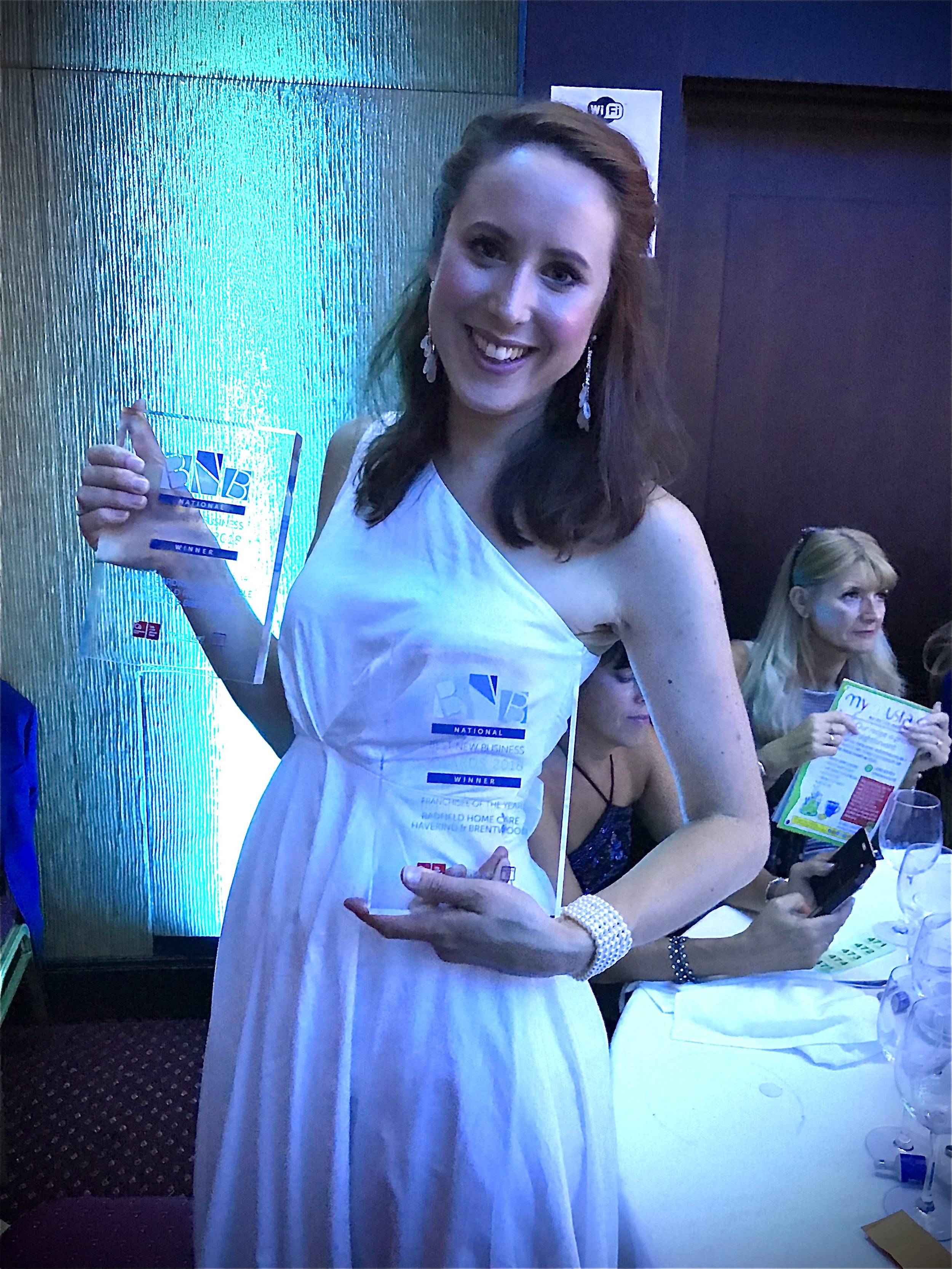
I finally started my first business in 2017 - here I am in 2018 at the National New Business Awards winning Business Women and Franchisee of The Year Awards.
Leaving a steady job to run your own business is one of the most exciting, and scary, things you may ever do.
For about a decade after graduating from the Warwick Uni, I worked in corporate strategy. On paper, everything made sense: a solid career, a regular six-figure salary, structure, and a clear path. Yet underneath all of that, there was a fire in my belly that I had been ignoring: I wanted to run my own business.
Maybe you are still working a job and get those Sunday night blues, or perhaps you have dipped your toe into starting a side hustle. I want you to know that transitioning from employee to business owner rarely happens overnight. And no one else is going to do it for you - if it’s something you want, you need to do the work. Over the last ten years of building and selling businesses, and coaching countless clients through their own transitions from employee to business owner, I’ve seen a clear pattern in how that transition unfolds.
Here are the stages of moving from a job to running your own business, what to look out for at each step, and my practical tips for making the leap(!) sustainably.
Stage 1: The employee safety net
If you are currently in a job and you have that same fire in your belly to build something of your own, you are in Stage 1. Not everyone has a crystal-clear idea of what they want to do right away - I definitely didn’t. I was hoping I’d wake up one day with a great new invention or business idea, but that just didn’t happen. Instead, I went to business expos, researched online and read a book about career transitions.
What to look out for & be aware of:
The comparison trap: When I first started researching online, I looked at polished business owners on Instagram and caught myself thinking, "I’m too old for this," or "I could never show up like that." Remember that the polished people you see online have taken years to get to that point. Use social media for inspiration, not intimidation.
Rushing the process: Clarity doesn't happen overnight. Give yourself permission to sit with your ideas and let them evolve - don’t put too much pressure on yourself to have everything figured out right away.
Keep your ideas to yourself: I know you’re going to be excited as this process unfolds, but I highly recommend you keep your ideas to yourself at the start. From personal experience and many conversations with other business owners, your friends and family will have their own opinions on your ideas, and it’s really important to keep true to yourself and figure out your business, instead of getting swayed by other people’s judgement.
Top tips for stage 1:
Read and research: Pick up books about changing careers and starting a business, and immerse yourself in podcasts or articles that spark ideas. Find people that inspire you that are slightly further along in their journey.
Go to exhibitions: Visit business shows or franchise exhibitions just to wander around, talk to people, and see what inspires you. This is what I did and it really helped me make that leap.
Journal your passions and skills: Grab a notebook and write two lists - what you genuinely love doing, and all the transferable skills you’ve built up in your career. Let yourself reflect and meditate on where those two lists overlap. Use your journal to brainstorm ideas, brand names, content ideas, your product/services ideas, etc.
Consider if you need extra support: I really feel like it’s important to sit with your ideas at this initial stage, however if you do want some support, consider a business coach, mentor, strategist, to help formulate your ideas and move forward.
“Full disclosure: my own leap was a bit unconventional. I was working in corporate in Australia in my last employed role. When I left Australia and moved back to the UK, I went straight into starting my first business from scratch. While it worked out, it’s not necessarily the route I recommend.”
Stage 2a: Starting something on the side
Stage 2a is when you move from daydreaming to actually getting your business off the ground while still working your normal employed hours.
Full disclosure: my own leap was a bit unconventional. I was working in corporate in Australia in my last employed role. When I left Australia and moved back to the UK, I went straight into starting my first business from scratch. While it worked out, it’s not necessarily the route I recommend - because financially, the early days of starting a business are tough. Building alongside your day job gives you regular income so your business decisions aren't being made in a scarcity mindset.
What to look out for & be aware of:
Overspending: Be very careful about what you invest in at the start. Unless you have a significant pot of cash sitting ready to invest, you do not need to spend thousands on high-end branding, a bespoke website, or fancy tech. Your brand and offers will naturally evolve as you figure things out. Test the market and figure out what your business stands for before you jump into lots of investments. There are plenty of free or low value options for getting started.
Time strain & burnout: Trying to run a business in your evenings and weekends on top of a full-time job is a massive stretch. You still want time for your hobbies, your family, etc. Decide what hours you want to dedicate to your business and keep those boundaries firm.
The ‘secret side-hustle’ trap: Treat this as a short-to-medium-term bridge, not a permanent way of living, and make sure the people closest to you are on board.
Top tips for stage 2a:
Have open conversations at home: Sit down with your partner, family, or support system so they know what you’re building, why your schedule might look different for a while, and how they can support you. Be clear on those boundaries and make sure you have communicated them well.
Build a 6-month financial buffer: From Stage 1 right through Stage 2, actively save money. Aim for at least a six-month runway in the bank so that when you do leave your job, you have breathing room as the business grows.
Keep your launch lean and simple: Set up a basic social media profile (Instagram, LinkedIn, or TikTok generally), consider putting together a simple starter website (I used Squarespace, or Wix works well), get clear on your offer and pricing, and start testing the market before investing heavily.
Stage 2b: Dialling back the day job
Once your business starts getting traction and you’ve tested your offers, Stage 2b is where you create more breathing room in your week without losing your safety net completely - and where your mindset needs to shift from employee to business owner.
What to look out for & be aware of:
Your capacity: There comes a point where you simply cannot fulfil your business's potential if you're working 40+ hours for someone else.
The ‘life admin’ trap: When you drop a day at your job, friends, family, and household chores will naturally try to fill that space unless you hold firm boundaries.
Top tips for stage 2b:
Negotiate flexible or reduced hours: Have a conversation with your employer about scaling back. Some of my clients move to compressed days, go part-time, or drop Fridays so they have a dedicated day every week to focus purely on their business.
Protect your time like a CEO: From this stage onwards, you have to treat your business hours as non-negotiable. Be crystal clear with the people around you - your partner, family, and friends - that you need this protected time to build your business up if it’s going to be successful and enable you to leave your job longer term.
Consider getting a coach / mentor / strategist: Some of my clients have loved investing in working together at this stage. They have more time to dedicate to their business, but sometimes don’t know what to focus on and that’s where professional support comes in.
Stage 3: Handing in your notice and going all in
You cannot build a successful business in isolation. Running a business is brilliant, but there will be days when you feel like quitting. When those messy moments hit, having the right support system around you is the difference between throwing in the towel and pushing through.
When I started my first business back in 2017, I was blessed with wonderful friends and family, but hardly any of them ran their own businesses. As much as they loved me, they couldn't truly understand the specific pressures of entrepreneurship.
When I started this business in 2021, everything was different. I surrounded myself with a community of fellow business owners - women who quickly became real friends. Having that tribe to lean on, celebrate wins with, and text when things got tough completely transformed my self-belief. Find your village. It is non-negotiable for long-term success.
Ready to Map Out Your Own Transition?
Whether you are still planning your exit from your day job or you've already taken the leap and want to build full-time earnings in part-time hours, you don't have to figure out the strategy on your own.
Elevate with Strategy: My flagship 6-month 1:1 strategic coaching program designed to help you map out a clear roadmap, protect your time, and scale sustainably on your terms. (Currently operating a waitlist for January 2027 starts!)
Get On It With Jen: My intimate, high-impact in-person planning workshops run 3 times a year in Essex for focused strategy, connection, and accountability.
👉 Click here to book a 1:1 relaxed chat and let’s find out if I’m your person to help you build your next chapter.
PS you can also join my newsletter here (I send one out per month) or message me on insta or LinkedIn @jenlisterstrategy.